
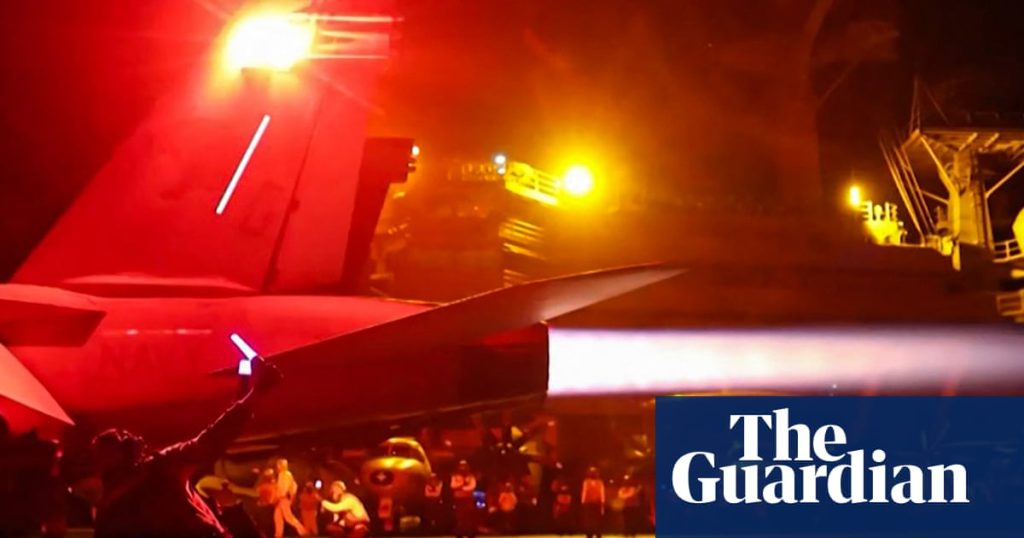
American forces launched a ninth consecutive night of strikes against Iran early Monday, marking a sharp escalation in a conflict that has pushed oil prices past $90 a barrel for the first time since June and brought the two nations closer to all-out war. The latest bombardment came after the Pentagon announced the death of another American service member on Saturday, killed in northern Iraq during what officials described as a controlled detonation of unexploded ordnance from a downed Iranian attack drone. It was the third US fatality in recent days, following an Iranian strike on a Jordanian airbase Friday that killed two service members and left another missing in action. Seventeen American military personnel have now died since the war began. Speaking to reporters aboard his flight back from the World Cup final, President Donald Trump confirmed the new wave of strikes, saying they were carried out in honor of those killed. “We hit them very hard again tonight,” he said.
As the missiles fell early Monday, a ship burst into flames in the strait of Hormuz near Oman’s coastline, according to the British military, which did not immediately identify the cause. Iran’s Revolutionary Guards later claimed responsibility for blowing up two oil tankers that had attempted to use the southern corridor through the strait — a route the US had been encouraging commercial vessels to take to avoid Iranian interference. There was no independent verification of that claim. Shipping traffic through the strait has largely ground to a halt, choking off a waterway that once carried roughly one-fifth of global oil supplies and sending tremors through energy markets worldwide.
The collapse of last month’s interim ceasefire deal has accelerated the slide toward wider conflict. Iran’s supreme leader, Mojtaba Khamenei, warned Saturday that continued American attacks would result in “unforgettable lessons,” while an Iranian negotiator announced Tehran was suspending its commitments under the agreement and accused Washington of violating it first. With the halfway point already passed in the deal’s mandated sixty-day window for negotiating a permanent end to hostilities and addressing Iran’s nuclear program, hopes for diplomacy appear increasingly faint. Trump has threatened to target Iranian power stations and bridges unless Tehran loosens its grip on the strait, and the US reimposed a naval blockade on Iranian ports last week, redirecting six ships and disabling one more.
Iranian retaliation has rippled across the region, with air raid sirens sounding Monday morning in Bahrain, where the US embassy issued a warning that Iran may seek to attack locations in central Manama. Revolutionary Guard forces also claimed a “surprise attack” on an enemy command center in Syria’s Al-Tanf region. Israel, meanwhile, has watched with growing alarm after Iran struck sites inside Jordan on Sunday. Defense Minister Israel Katz vowed Sunday that any missile fire toward Israeli territory would be met with full force, and a US official told Reuters that dozens of additional refueling planes would be sent to bolster Israel’s defenses as part of a broader reinforcement of American force posture across the Middle East.
Energy Secretary Chris Wright defended the administration’s shifting strategy on Sunday, acknowledging that the mission had evolved from seeking cooperation to enforcing access regardless of whether Tehran agrees. “We did a pause to try to get an agreement with the Iranian people to allow oil to flow without them attacking it,” Wright said. “They’ve proven unwilling to do that, and we’ve pivoted.” Brent crude climbed nearly three percent at the opening of Asian trading Monday, reaching $90.50 per barrel, reflecting deepening fears among traders that there is no quick resolution ahead for either the fighting or the free flow of crude through one of the world’s most vital shipping lanes.