
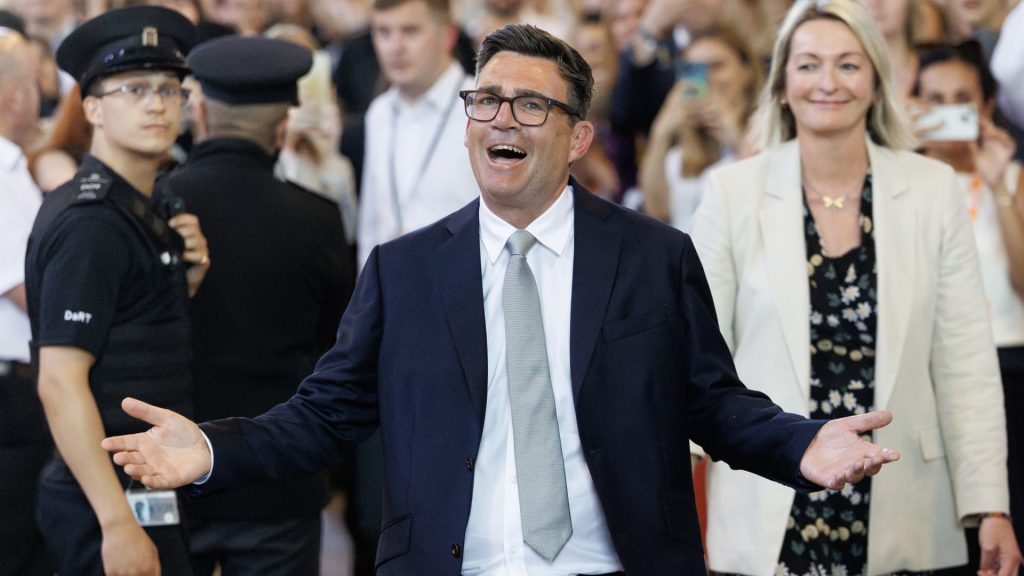
Britain is preparing for another shift in leadership as Andy Burnham readies himself to become the country’s seventh prime minister in ten years. The former Mayor of Greater Manchester, often referred to as the King in the North, is expected to be formally asked by King Charles to form a government this morning at Buckingham Palace. His ascent follows the resignation of Keir Starmer, who stepped down after a tumultuous period marked by policy reversals, internal party friction, and poor results in local elections.
The transition has already drawn loud commentary from across the Atlantic. U.S. President Donald Trump took to Truth Social over the weekend to voice his support for Burnham’s intentions to accelerate oil and gas exploration in the North Sea. In typical fashion, Trump used hyperbolic language to describe Britain’s current state, claiming that leveraging these invaluable resources would transform the nation from a poverty stricken disaster into one of the richest countries in the world.
Despite the presidential endorsement, financial markets have reacted with a mixture of curiosity and caution. Because Burnham is viewed as being further to the left than his predecessor, some investors initially feared a surge in public borrowing. While analysts suggest that bond markets have calmed since early concerns peaked, questions remain regarding how he will fund ambitious goals like expanding social care or increasing public control over energy and water services without upsetting fiscal rules.
As he prepares for his inaugural speech, Burnham faces the challenge of balancing populist appeal with economic stability. He has previously criticized the centralization of political power and expressed a desire to fix systemic failures in British society. While he has pledged to honor existing manifesto commitments concerning income tax, experts warn that potential reforms to council tax or inheritance tax could still be on the horizon as he seeks to redefine Britain’s economic trajectory.