
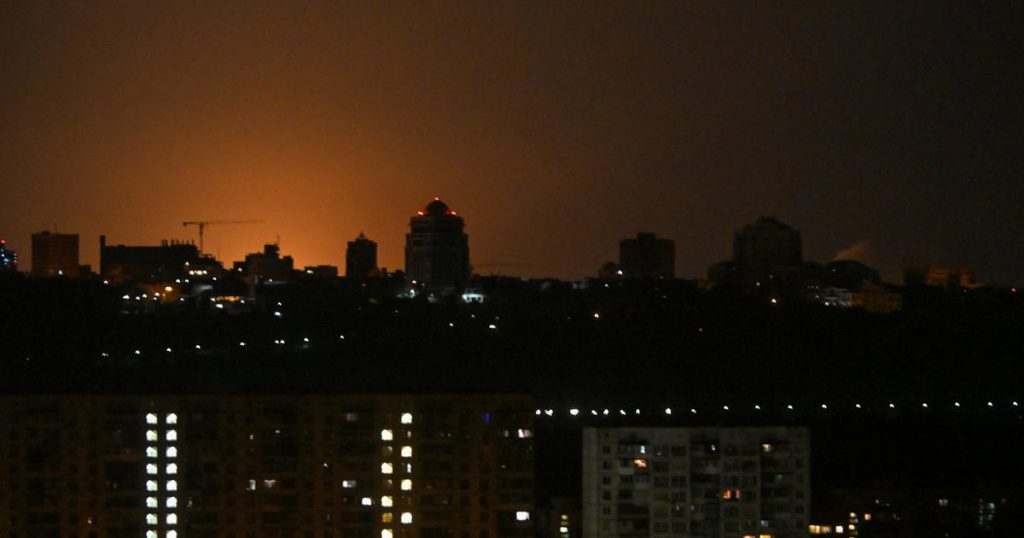
Russia unleashed a massive overnight assault on Kyiv that killed at least one person and wounded 16 others, as explosions from ballistic missiles echoed across the Ukrainian capital for hours. The attack began around 1:30 a.m. local time and stretched into the early morning, part of a broader barrage that saw Moscow launch 41 missiles and 125 attack drones across Ukraine, according to the country’s air force. Twenty-five of those missiles were ballistic weapons, and President Volodymyr Zelenskyy said most of them were aimed directly at Kyiv.
The strikes sparked fires across five districts of the city, damaging residential buildings, a dormitory, office and industrial sites, and vehicles. Rescue workers pulled four people from a burning private home in the Sviatoshynskyi district and evacuated residents from a burning three-story building in the Shevchenkivskyi district, where one person was later found dead. Firefighters also battled blazes in the Solomyanskyi, Desnianskyi and Dnipro districts as emergency crews worked through the night.
Viktoria Shejko, a 32-year-old mother of seven, was sheltering in the corridor of her apartment block with her family when the blasts began. She said they checked for ballistic missile activity on their phones before huddling together, then listened as one explosion followed another. She described the psychological toll of increasingly frequent ballistic attacks, noting that strikes that once came weekly now arrive almost daily.
Ukrainian forces intercepted 108 drones and 18 missiles overall, and the military said it shot down at least 17 ballistic missiles during Sunday’s assault, suggesting Kyiv may have replenished some of its dwindling Patriot interceptor stockpile. During an earlier attack this month, Ukraine failed to intercept any ballistic missiles at all, exposing serious gaps in its air defenses as Patriot supplies ran critically low. At a NATO conference earlier this month, President Trump said he is prepared to grant Ukraine licenses to produce Patriot interceptor missiles domestically, though details and a timeline for implementing that decision remain unclear.