
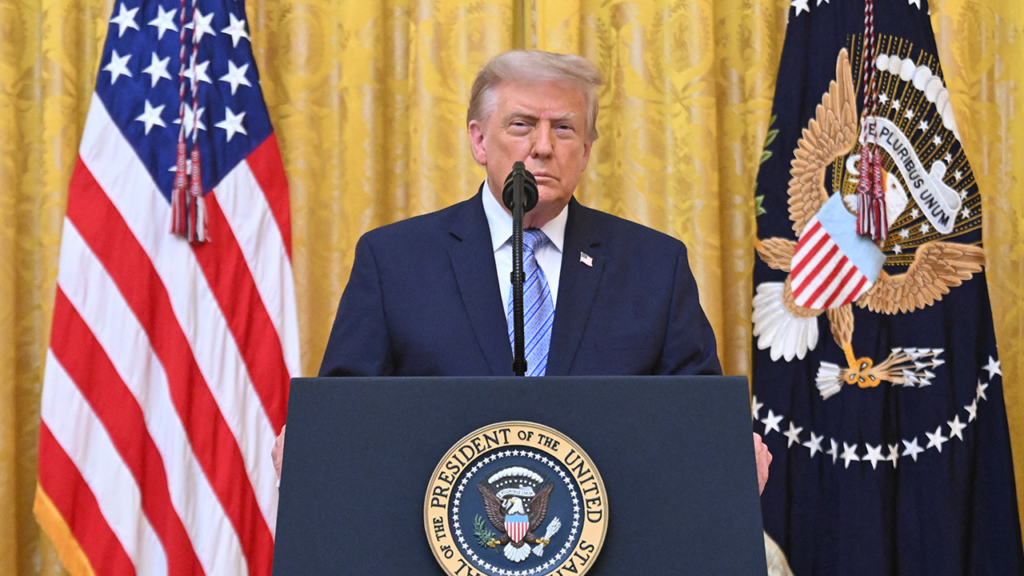
President Donald Trump has announced a landmark agreement for Hamas to disarm and for Israeli forces to withdraw from Gaza, marking a significant shift nine months after a previous U.S. brokered ceasefire. While Hamas officials confirmed the deal on Friday, diplomats warn that the path forward remains fraught with difficulty. Major hurdles regarding implementation timelines and specific conditions persist, leaving the actual winding down of the war and the start of Gaza’s massive reconstruction efforts in question.
As this diplomatic breakthrough unfolds in Gaza, tensions elsewhere in the region remain dangerously high. The White House is pushing back against reports of imminent expanded strikes on Iranian energy infrastructure, though Press Secretary Karoline Leavitt emphasized that Tehran will continue to pay for breaking prior agreements and targeting American soldiers. During a recent Cabinet meeting at Camp David, President Trump admitted that fighting with Iran may drag on, suggesting that while the U.S. aims for victory, Tehran might simply peters out as its military capabilities are systematically weakened.
The broader regional instability is further complicated by shifting alliances and dwindling resources. Saudi Arabia is moving forward with plans for a Red Sea defense coalition aimed at neutralizing Houthi threats to commercial shipping, adding another layer of military activity to an already volatile landscape. Meanwhile, domestic critics like Representative Thomas Massie have urged the administration to walk away from negotiations entirely, arguing that Iran is merely stalling until U.S. leverage erodes ahead of upcoming political cycles.
Behind the scenes, however, military planners are facing a quiet crisis involving depleted munitions. Reports indicate that U.S. stockpiles of critical missile defense interceptors, specifically Patriot and THAAD systems, have plummeted since the onset of hostilities with Iran. Experts warn that these shortages could limit the United States’ ability to respond to new provocations or defend interests in other global theaters like Europe or the Indo-Pacific while it waits years for inventories to rebuild.