
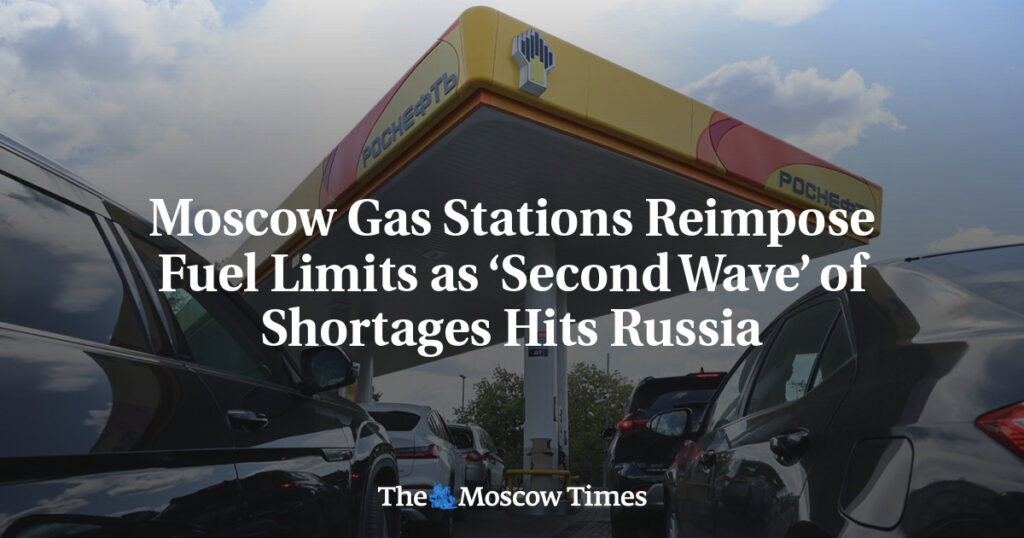
Motorists in Moscow and the surrounding regions are once again facing strict fueling limits as a second wave of supply shortages hits the Russian domestic market. Major energy players like Gazprom Neft have reinstated a sixty liter cap on regular gasoline per customer, reversing a brief period of relief seen earlier this month. Similarly, Tatneft has implemented its own restrictions, capping regular gasoline at fifty liters and diesel at sixty liters per vehicle. These moves signal a deepening crisis for drivers who had hoped the volatility of the summer season was behind them.
The current instability is largely attributed to a sustained campaign of Ukrainian drone strikes targeting oil refineries and critical storage hubs throughout the country. While government officials previously suggested that the market was stabilizing, industry analysts warn that supplies will likely remain tight until the peak summer travel demand eases. The situation is particularly dire in outlying areas such as Siberia and the Far East, while annexed Crimea continues to struggle with acute shortages. Recent attacks have only added to the pressure, including a strike in Bashkortostan that left an oil refinery ablaze this week.
To combat these deficits, the Kremlin has extended a temporary ban on gasoline and diesel exports through early next year in an effort to keep more product within its borders. Despite these measures, prices surged by nearly twenty percent over the first half of the year before dipping slightly in August. Energy Minister Sergei Tsivilyov recently acknowledged that long queues are still common at many pumps across the nation, although he maintained that fuel remains available overall and credited ongoing efforts to fix logistical bottlenecks.