
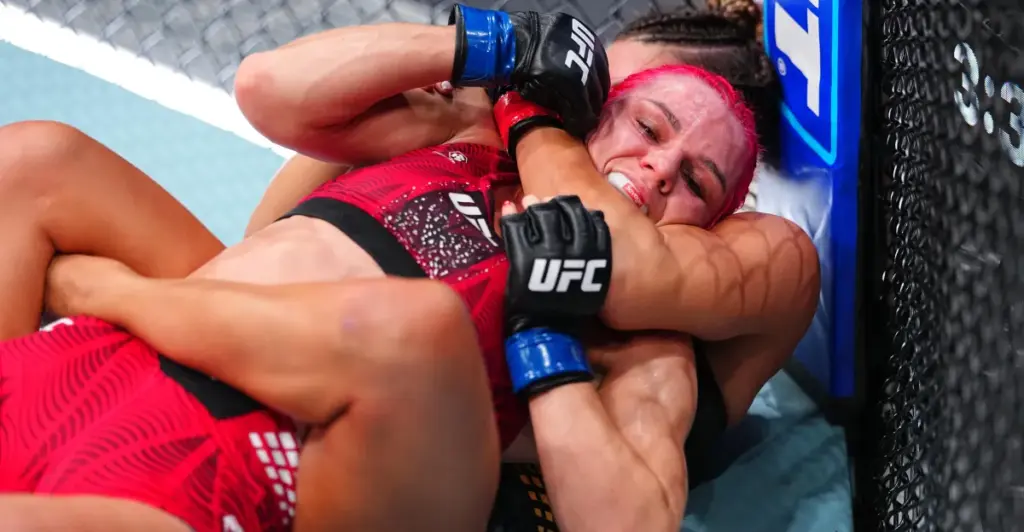
The mixed martial arts world is reeling after a dramatic fallout between Gillian Robertson and her long-time coach, Din Thomas. Following a decisive loss to Mackenzie Dern at UFC 330, where Robertson struggled against takedowns in her first title shot, Thomas took to the post-fight broadcast to announce his retirement from cornering. In a move that many viewed as cold, Thomas suggested that he wanted to take Robertson as far as she could possibly go and implied that this defeat might represent the ceiling of her potential. While Thomas later issued an apology describing his remarks as despicable, the public nature of the split has sparked intense debate over coaching ethics.
UFC veteran Matt Brown recently weighed in on the controversy during an appearance on The Fighter vs. The Writer podcast. While Brown stopped short of condemning Thomas entirely, he admitted that the timing of the announcement was incredibly poor. He noted that while some coaches treat their roles as simple business transactions, he views the bond between trainer and athlete as a friendship that transcends wins and losses. According to Brown, sticking by a fighter through their lowest moments is paramount, making it seem misplaced for Thomas to pivot the conversation toward his own retirement immediately after his pupil suffered a heartbreaking loss.
Despite his critique, Brown offered some nuance regarding the immense pressure involved in high-level coaching. He suggested that Thomas’s comments might have stemmed from a place of self-blame or extreme frustration after seeing a meticulously crafted game plan fail on center stage. Brown acknowledged that coaching is often a thankless and selfless job where emotions can boil over when hours of preparation vanish in minutes. He speculated that Thomas might have felt he had given everything he had to offer and believed Robertson needed someone else to reach the next level.
Ultimately, however, Brown maintained that there is a proper time and place for such conversations, arguing that national television following a major defeat was not it. He emphasized that regardless of any frustrations regarding a fighter’s performance or adherence to strategy, publicly quitting on an athlete in their moment of vulnerability remains in bad taste. As Robertson has yet to comment on the situation herself, the community continues to grapple with whether this was an honest emotional outburst or an unfair blow to a fighter already dealing with a tough night at the office.