
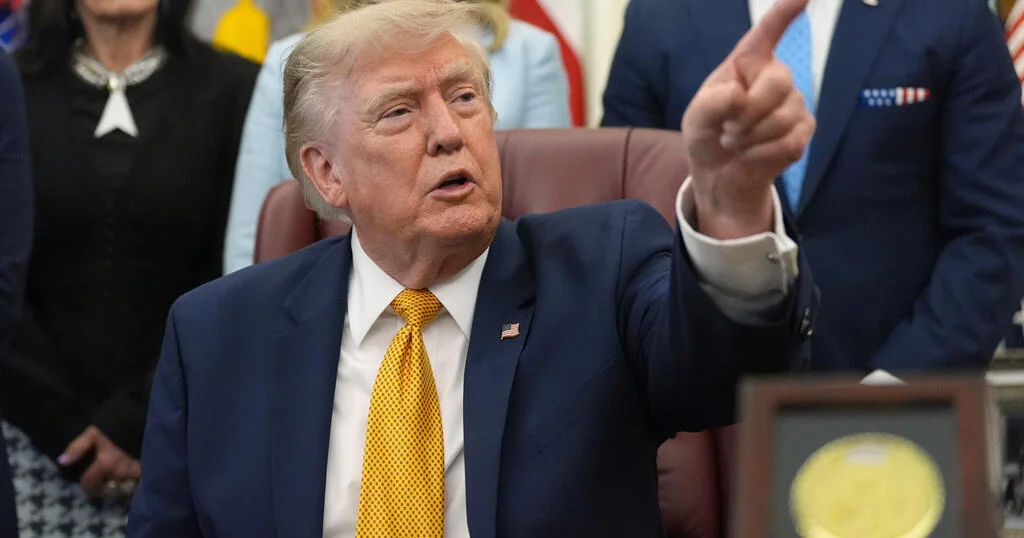
Despite President Trump’s public insistence that nuclear talks with Tehran could begin as early as today, senior U.S. officials have told CBS News that no new negotiations with Iran are currently planned, creating a striking disconnect between the president’s rhetoric and the reality on the ground. Speaking to reporters in the Oval Office on Monday, Trump suggested that diplomacy would move swiftly, saying people would find out “today or tomorrow” how things were going and that discussions about reopening the Strait of Hormuz would be followed by broader conversations about denuclearization. He framed his approach as one of patience tempered by overwhelming force, telling reporters he wanted to give Iran “every last chance before decapitation.”
Iranian leadership, however, has flatly denied that any direct talks with Washington are underway, and there is little indication on either side that diplomatic channels have been formally reopened. The gap between Trump’s optimistic projections and what American officials describe privately underscores what appears to be a familiar pattern for this administration — bold public declarations of impending breakthroughs that fail to materialize into concrete diplomatic engagement. According to those familiar with internal deliberations, Iranian officials have grown increasingly skeptical of Trump’s alternating threats and offers to negotiate, viewing his repeated pullbacks from promised military strikes as evidence that he lacks the appetite for a wider war rather than genuine interest in dialogue.
Meanwhile, military pressure continues to mount in the region regardless of the diplomatic uncertainty. U.S. Central Command announced Monday that American forces had redirected 44 commercial vessels under its blockade against Iran, disabling two vessels and boarding two more. The strait itself remains far from normal operations, according to shipping data firm Kpler, which reported just nine confirmed transits through Hormuz on Sunday, several of which involved sanctioned or shadow fleet ships traveling along an Iranian-established corridor where operators must coordinate with Tehran and potentially pay tolls. Traffic through the nearby Bab el-Mandeb chokepoint has also dropped significantly, falling from 41 crossings on July 31 to just 30 the following day.
Trump claimed over the weekend that appeals from Saudi Arabia, the United Arab Emirates, Qatar, and even Iran itself persuaded him to hold off on what he described as potentially the largest attacks since World War II against Iranian energy infrastructure. Whether those reported interventions genuinely shifted administration policy or simply provided convenient cover for a decision already made remains unclear, but the episode fits a pattern in which aggressive posturing gives way to last-minute delays framed as magnanimous gestures toward peace. With both sides publicly dug in and private channels apparently dormant, the prospects for meaningful negotiation appear slim despite the president’s assurances to the contrary.