
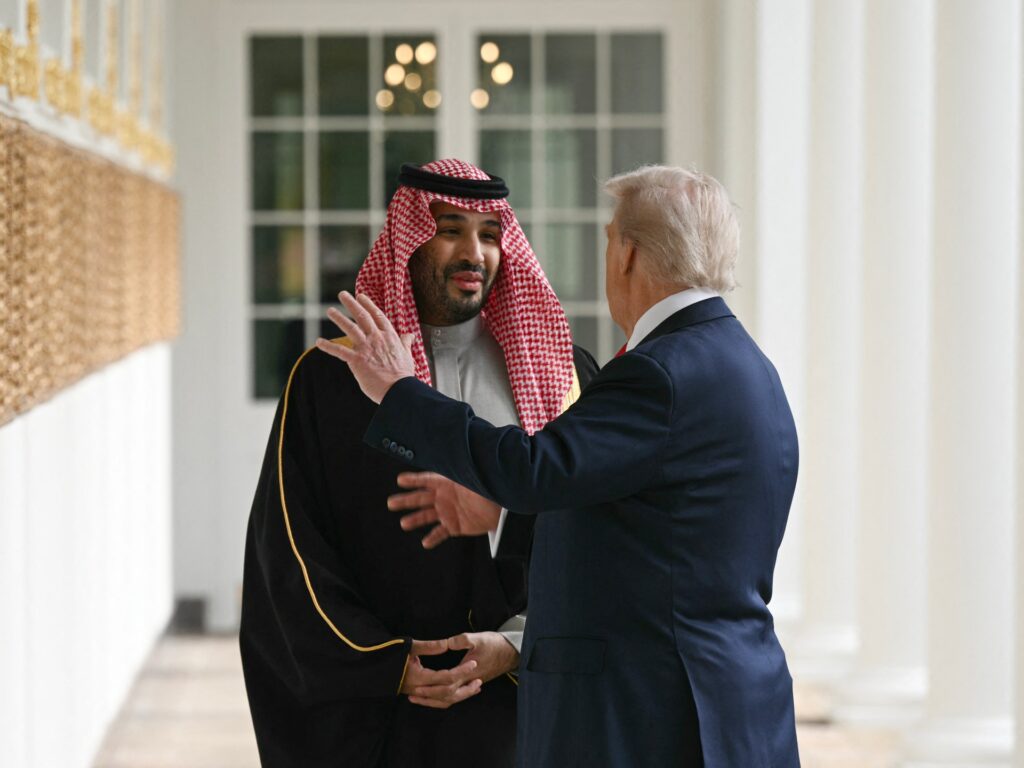
Just days after the United States and Saudi Arabia announced a nuclear cooperation agreement designed to establish a civilian nuclear program in the kingdom, the deal appears to have hit a significant roadblock. The agreement, expected to span three decades and transfer American technology and expertise to Riyadh, would allow Saudi Arabia to harness nuclear power for electricity generation. That in turn would free up more of the kingdom’s fossil fuels for export and help meet soaring energy demands driven by data centers. But President Donald Trump threw the arrangement into uncertainty when he took to social media a day later to declare that Saudi Arabia must first normalize relations with Israel before any nuclear deal moves forward.
Saudi Arabia has long maintained that it will not establish formal diplomatic ties with Israel without a clear pathway to Palestinian statehood, a position Israel’s current government firmly rejects. Riyadh has not yet responded publicly to Trump’s latest condition, but analysts say linking the nuclear agreement to normalization contradicts both Saudi Arabia’s stated position and previous American commitments. Dania Thafer, executive director of the Gulf International Forum in Doha, told Al Jazeera that if Washington formally conditions nuclear cooperation on normalization, it risks undermining the entire agreement. Steven Cook of the Council on Foreign Relations was more blunt, writing that Trump’s demand has left the deal in what he called a state of diplomatic suspension.
Even before the president’s surprise condition, questions loomed over key details of the arrangement. While the full text remains unreleased, media reports suggest one provision could allow American companies to build a uranium enrichment facility inside the kingdom, though Trump’s own social media post seemed to cast doubt on whether Saudi-based enrichment would remain on the table. Without domestic enrichment, Saudi Arabia would need to import commercial-grade low-enriched uranium from abroad, as other nations with nuclear energy programs do. The deal also faces scrutiny over international oversight, as Saudi Arabia reportedly has not agreed to the International Atomic Energy Agency’s additional protocol allowing expanded inspections and verification.
If the agreement ultimately falls through, Saudi Arabia is not short on alternatives. Thafer noted that while Washington is viewed as an important partner, it is not Riyadh’s only option, pointing to countries such as China, Russia, South Korea, France, and the UAE as potential partners for nuclear cooperation. However, turning to a strategic competitor like Beijing or Moscow would carry far greater political costs, forcing Riyadh to manage competing relationships on defense and regional security with Washington alongside nuclear ties with an American rival. For now, the deal’s path through Congress remains unclear, and until the standoff over normalization is resolved, one of the region’s most anticipated energy agreements sits squarely in limbo.