
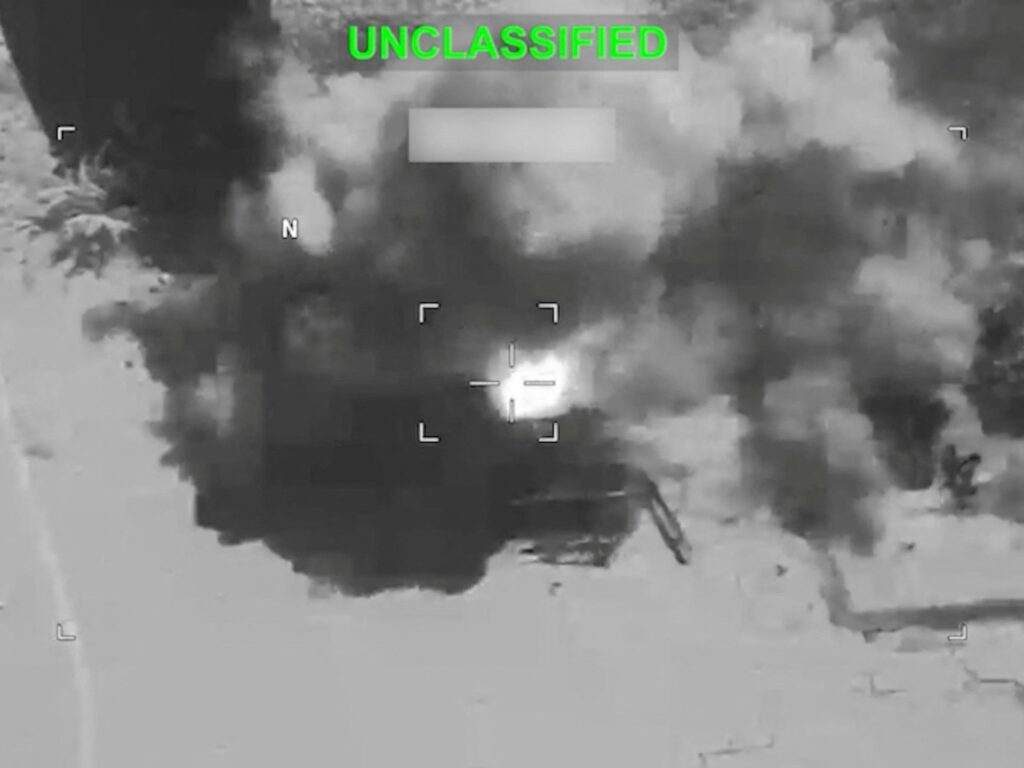
The United States has concluded its eleventh consecutive night of airstrikes against Iran, marking a significant escalation in a conflict centered on the control of critical waterways. According to U.S. Central Command, the campaign aimed to dismantle Iran’s ability to threaten commercial shipping in the Strait of Hormuz by targeting military operation centers, aircraft hangars, and drone storage facilities. While much of the recent activity concentrated on southern regions like Bushehr and Sirik, reports emerged Wednesday of explosions reaching further north toward Tabriz and activating air defenses in the eastern reaches of Tehran.
Tehran responded swiftly with retaliatory drone strikes across several neighboring countries housing American assets. Iranian military officials claimed their forces successfully hit ammunition depots and logistics hubs at the Doha garrison in Kuwait, as well as bases in Jordan and Bahrain. This cycle of violence has already taken a heavy toll; the Pentagon recently confirmed that 18 U.S. service members have died since the start of the war, including three killed during a recent attack on a base in Jordan.
As the kinetic conflict intensifies, the financial and political costs are becoming impossible to ignore. Defense Secretary Pete Hegseth informed Congress that the war has already cost 37.5 billion dollars, prompting him to request an additional 90 billion dollars in funding. This request drew sharp criticism from Democratic lawmakers, including Senator Jon Ossoff, who questioned why more money is required if previous claims suggested Iran’s military had already been destroyed. Meanwhile, President Donald Trump has signaled further aggression, suggesting a heavy strike on a suspected nuclear facility known as Pickaxe Mountain may be imminent.
Despite the rhetoric and ruins, some doors to diplomacy remain cracked open. Secretary of State Marco Rubio emphasized that while Washington remains open to talks, Tehran must demonstrate sincerity and cease its attempts to control international waterways through force. In tandem with these statements, regional mediators from Qatar and Pakistan are working frantically behind the scenes to coordinate de-escalation efforts before any potential strike on nuclear sites triggers an uncontrollable wider war across the Middle East.