
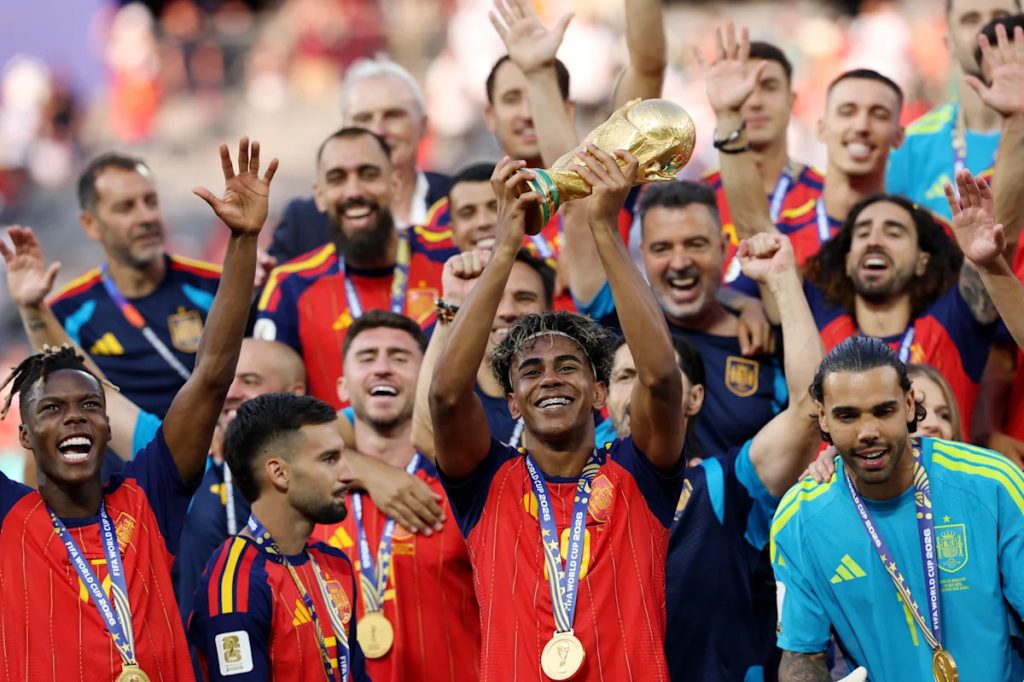
The scene at MetLife Stadium on Sunday provided a stark contrast in emotion as the dust settled on the World Cup final. At one end of the pitch, a tearful Lionel Messi sought comfort from his teammates and chanting supporters, marking what felt like the definitive end of an era for the Argentine legend. In the center of the worn grass, however, was a jubilant Spanish squad celebrating a hard fought 1-0 victory that served as a crowning achievement for a generation defined by absolute control. While the match was grueling and stretched into 120 minutes of tension, Ferran Torres finally broke the deadlock in the 106th minute, ensuring that Spain would hoist their second world championship trophy.
For most of the tournament, Spain had looked less like a soccer team and more like an unstoppable machine. They navigated thirty nine days across North America with a level of discipline that bordered on clinical, conceding only one goal over 750 minutes of play. Against Argentina, they effectively neutralized an offensive powerhouse, reducing Messi’s influence to almost nothing and keeping a clean sheet through sheer positional dominance. Though Argentine goalkeeper Emi Martinez made eleven saves to keep his side in the game during regulation, Spain’s persistence eventually paid off when Torres capitalized on his opportunity as a substitute, mirroring Mario Gotze’s famous winner against Argentina back in 2014.
This triumph confirms what global football has suspected for several years: Spain is currently operating on another level entirely. This win caps an extraordinary streak including recent European Championship and Nations League titles, alongside Olympic gold for their under twenty three squad and a Women’s World Cup title in 2023. Captain Rodri, who earned the Golden Ball as the tournament’s best player, embodied this era of success by organizing every phase of the game with surgical precision. With teenage stars like Lamine Yamal and Pau Cubarsi already anchoring the lineup, Spain hasn’t just reclaimed the throne; they have built a dynasty designed to last for years to come.
Despite the heartbreak for Argentina, coach Lionel Scaloni admitted that Spain deserved the result, acknowledging that while his team possessed incredible resilience throughout the knockout stages, they simply couldn’t find an answer for La Roja’s structure. For Spain’s manager Luis de la Fuente, the victory was about more than just tactics; it was about values and commitment. As his players celebrated on stage beneath a shower of confetti, it became clear that this wasn’t just a lucky break in extra time, but rather the inevitable conclusion to a period of total Spanish supremacy on the world stage.