
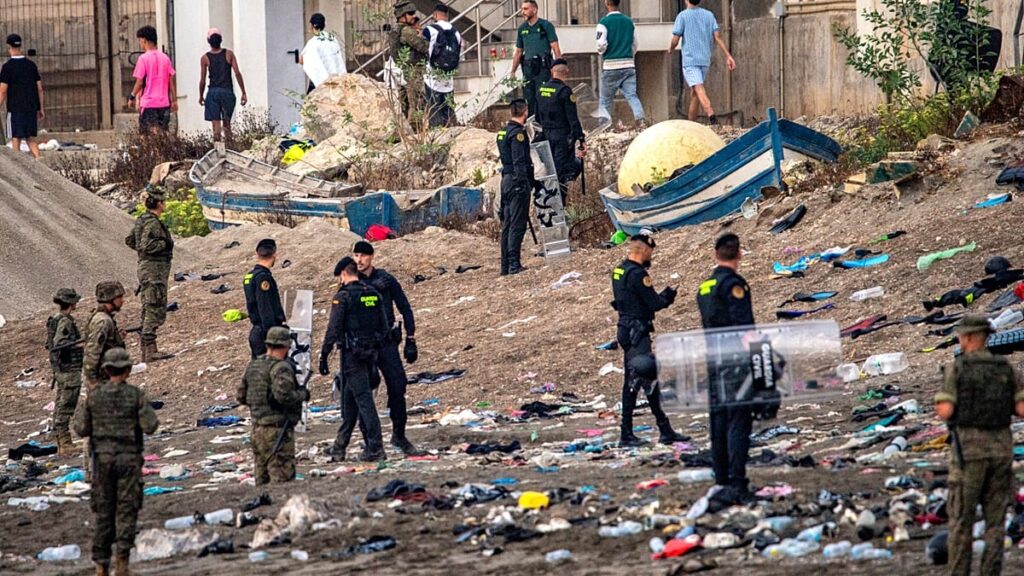
A coalition of twenty two European Union leaders is demanding urgent emergency talks following a massive surge of migrants into the Spanish exclave of Ceuta. The push for an immediate gathering comes after approximately fifty thousand people crossed from Morocco into the North African territory last Thursday. In a letter spearheaded by Italy and Denmark, member states described the situation as a matter of extreme urgency, calling for an extraordinary videoconference among interior ministers to prevent what they term uncontrolled mass crossings and hybrid threats.
Ireland, which currently holds the rotating presidency of the EU, confirmed that a meeting of the Justice and Home Affairs Council will take place this Tuesday. While EU foreign policy chief Ursula von der Leyen noted that none of the arrivals managed to reach mainland Spain or other parts of the union, she emphasized the need for a lessons learned process to bolster European resilience. However, there is visible friction within the bloc; France, Portugal, and Luxembourg notably declined to sign the letter requesting the summit.
Tensions have escalated as some signatory nations suggested that Spain’s decision to grant legal status to certain unauthorized migrants acted as a pull factor that encouraged the crisis. This accusation has sparked a sharp rebuttal from Spanish Prime Minister Pedro Sanchez, who criticized several EU members for an asymmetric response. Sanchez claimed that while many allies showed solidarity, others chose to attack Spain or even suggest its temporary suspension from the Schengen Area’s visa free travel zone.
The upcoming discussions aim to establish a coordinated European response and determine whether reinforced internal border controls are necessary. Signatories warned that allowing the perception that illegal entry is possible could undermine confidence in common migration policies across all member states. As Tuesday approaches, the focus remains on whether Europe can present a united front or if these diplomatic rifts will deepen amid one of its most significant recent border challenges.